# Population statistics tab

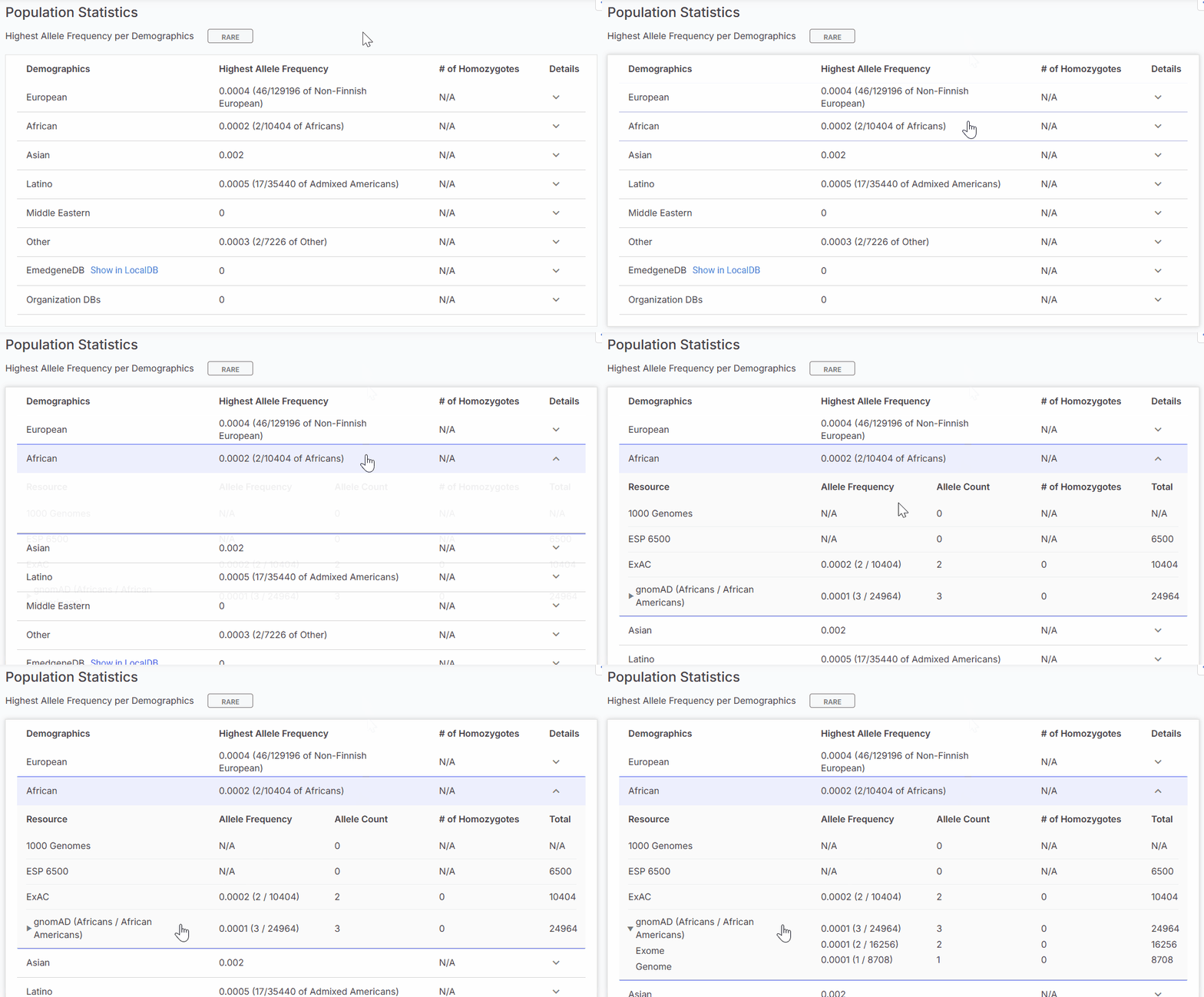
The *Population Statistics tab* addresses detailed population allele data across various ethnicities in public and internal databases. Field labels reflect their source databases—such as gnomAD, ExAC, and internal repositories—making it easier for users to trace allele frequency data back to its origin.

* Public databases (SNVs): 1000 Genomes, ESP 6500, ExAC, and gnomAD
* Public databases (CNVs): 1000 Genomes, gnomAD SV, Decipher, DGV
* Internal databases: The organization's custom databases

By clicking on the link on the Population Summary card in the Variant Page | Summary tab, users can switch between aggregate to population-specific views (e.g., East Asian, African). This can help assess whether a variant is rare or common within relevant ethnic groups—critical for applying ACMG tags like PM2 or BS1.

By clicking a row in the table, additional details including allele frequency, alternative allele count, and homozygotes count are reported for the selected population by different sources.

![](/files/rQXuc2DRZonXzKic8iYv)

### *Population Statistics* for mtDNA variants

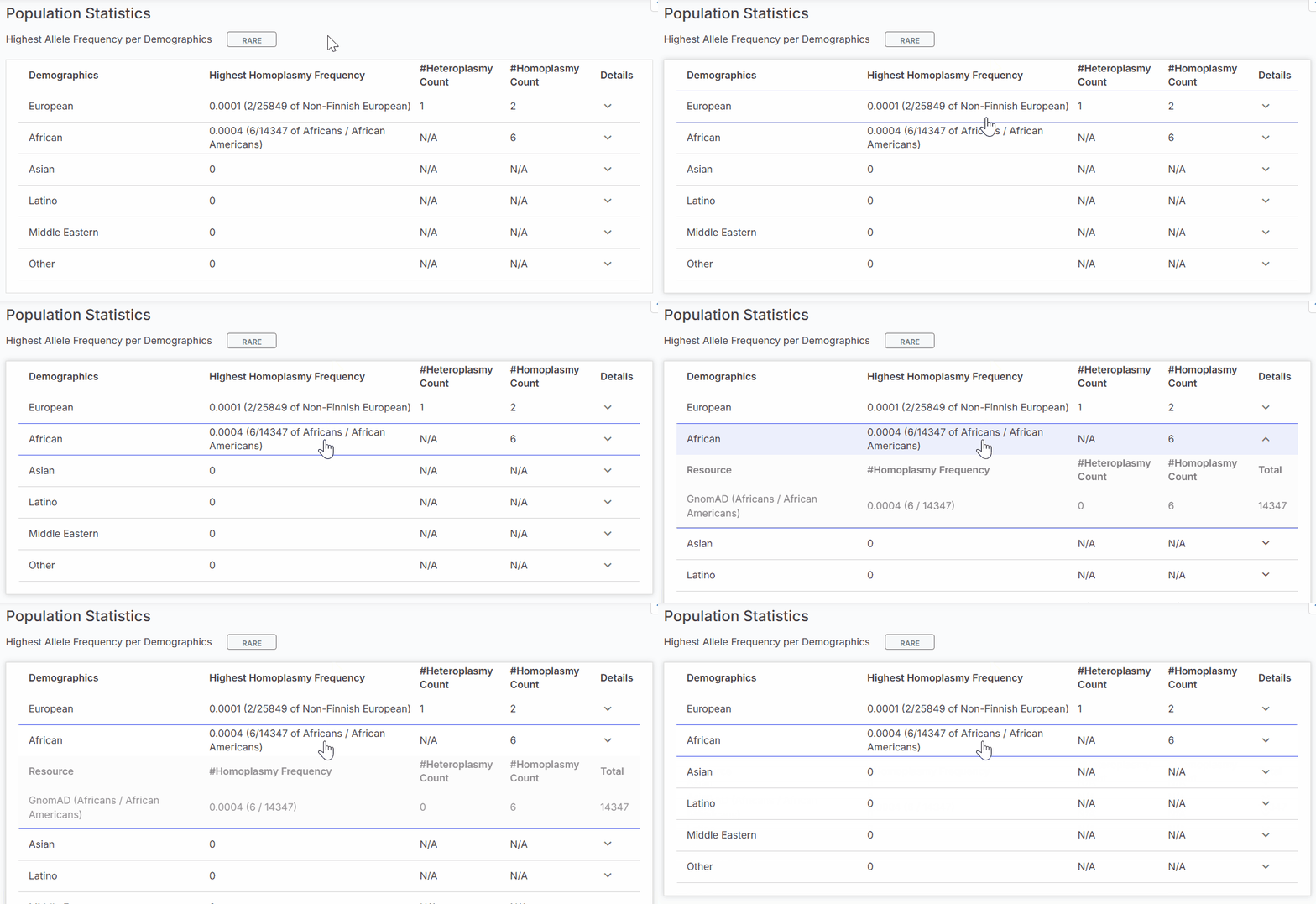
The *Population Statistics tab* displays population allele data across various ethnicities in:

* Public databases: gnomAD and [MITOMAP](https://academic.oup.com/nar/article/24/1/177/2359869)
* Internal databases: The organization's custom databases

with field labels aligned to their respective sources.

By clicking a row of the table, users can view homoplasmy and heteroplasmy frequencies, sample coverage, and maximum observed values to support more accurate interpretation of mitochondrial variant penetrance and population-level expression, especially when evaluating pathogenicity in the context of maternal inheritance.

![](/files/bVCvr4hvyovFRsXCDCHh)


---

# Agent Instructions: Querying This Documentation

If you need additional information that is not directly available in this page, you can query the documentation dynamically by asking a question.

Perform an HTTP GET request on the current page URL with the `ask` query parameter:

```
GET https://help.connected.illumina.com/emedgene/emedgene-analyze-manual/variant_page/population_statistics_section.md?ask=<question>
```

The question should be specific, self-contained, and written in natural language.
The response will contain a direct answer to the question and relevant excerpts and sources from the documentation.

Use this mechanism when the answer is not explicitly present in the current page, you need clarification or additional context, or you want to retrieve related documentation sections.
