# Visualizing gene expression in Chromosome view

From the DESeq2 task report, we can browse to any gene in the Chromosome view.

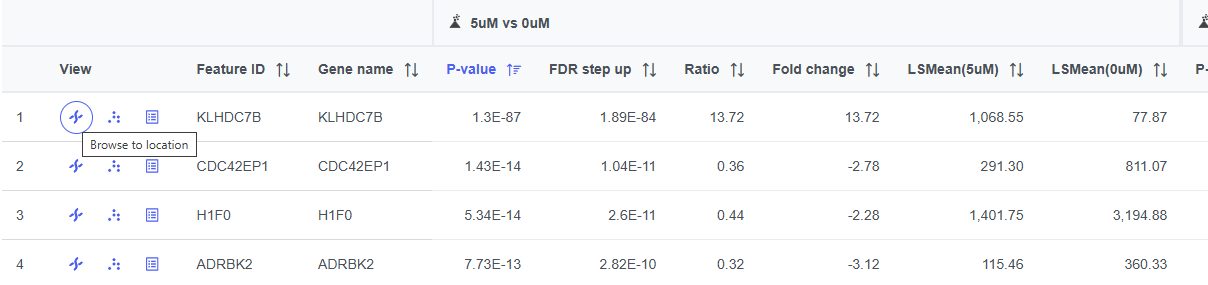
* Click ![Chromosome icon](https://1384254481-files.gitbook.io/~/files/v0/b/gitbook-x-prod.appspot.com/o/spaces%2FJVEESmJAPppJ3ijFq5aR%2Fuploads%2Fgit-blob-04cd38e5536f0be01f906e1ab67bbe9d1f7c6980%2Fchromosome-icon.png?alt=media) in the KLHDC7B row to open Chromosome view (Figure 1)

<figure><img src="https://1384254481-files.gitbook.io/~/files/v0/b/gitbook-x-prod.appspot.com/o/spaces%2FJVEESmJAPppJ3ijFq5aR%2Fuploads%2Fgit-blob-cace2e3b6f1230017b263831123bd2d51a7dae2c%2Fopen%20chromosome%20view.png?alt=media" alt=""><figcaption><p><em>Figure 1. Browsing to a location in Chromosome View</em></p></figcaption></figure>

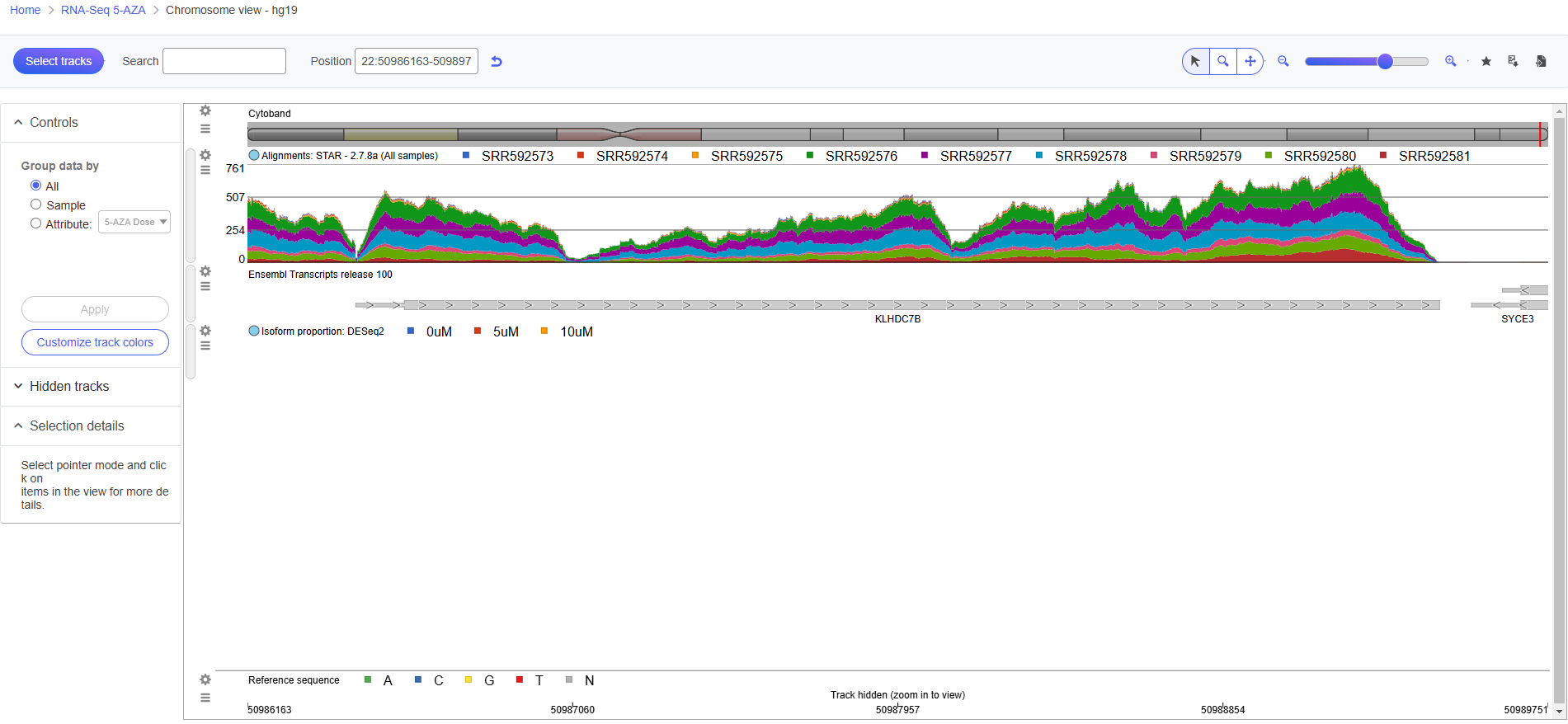
A new tab will open showing KLHDC7B in the Chromosome view (Figure 2).

<figure><img src="https://1384254481-files.gitbook.io/~/files/v0/b/gitbook-x-prod.appspot.com/o/spaces%2FJVEESmJAPppJ3ijFq5aR%2Fuploads%2Fgit-blob-87ca628733965d2d861c6aab26a069bc88dcd859%2Fchromosome%20view.png?alt=media" alt=""><figcaption><p><em>Figure 2. Viewing in Chromosome view</em></p></figcaption></figure>

Chromosome View shows reference genome, annotation, and data set information together aligned at genomic coordinates.

Each track has Configure track ![Configure track icon](https://1384254481-files.gitbook.io/~/files/v0/b/gitbook-x-prod.appspot.com/o/spaces%2FJVEESmJAPppJ3ijFq5aR%2Fuploads%2Fgit-blob-d13c284a59559aca016b66b849e856b87e7b9f48%2Fconfigure-track-icon.png?alt=media) and Move track ![Move track icon](https://1384254481-files.gitbook.io/~/files/v0/b/gitbook-x-prod.appspot.com/o/spaces%2FJVEESmJAPppJ3ijFq5aR%2Fuploads%2Fgit-blob-2546c895805caa1e366d02cbdeced29198c47adf%2Fmove-track-icon.png?alt=media) buttons that can be used to modify each track.

The top track shows average number of total count normalized reads for each of the three treatment groups in a stacked histogram. The second track shows the Ensembl annotation.

We can add tracks from any data node using Select Tracks.

* Click **Select tracks**

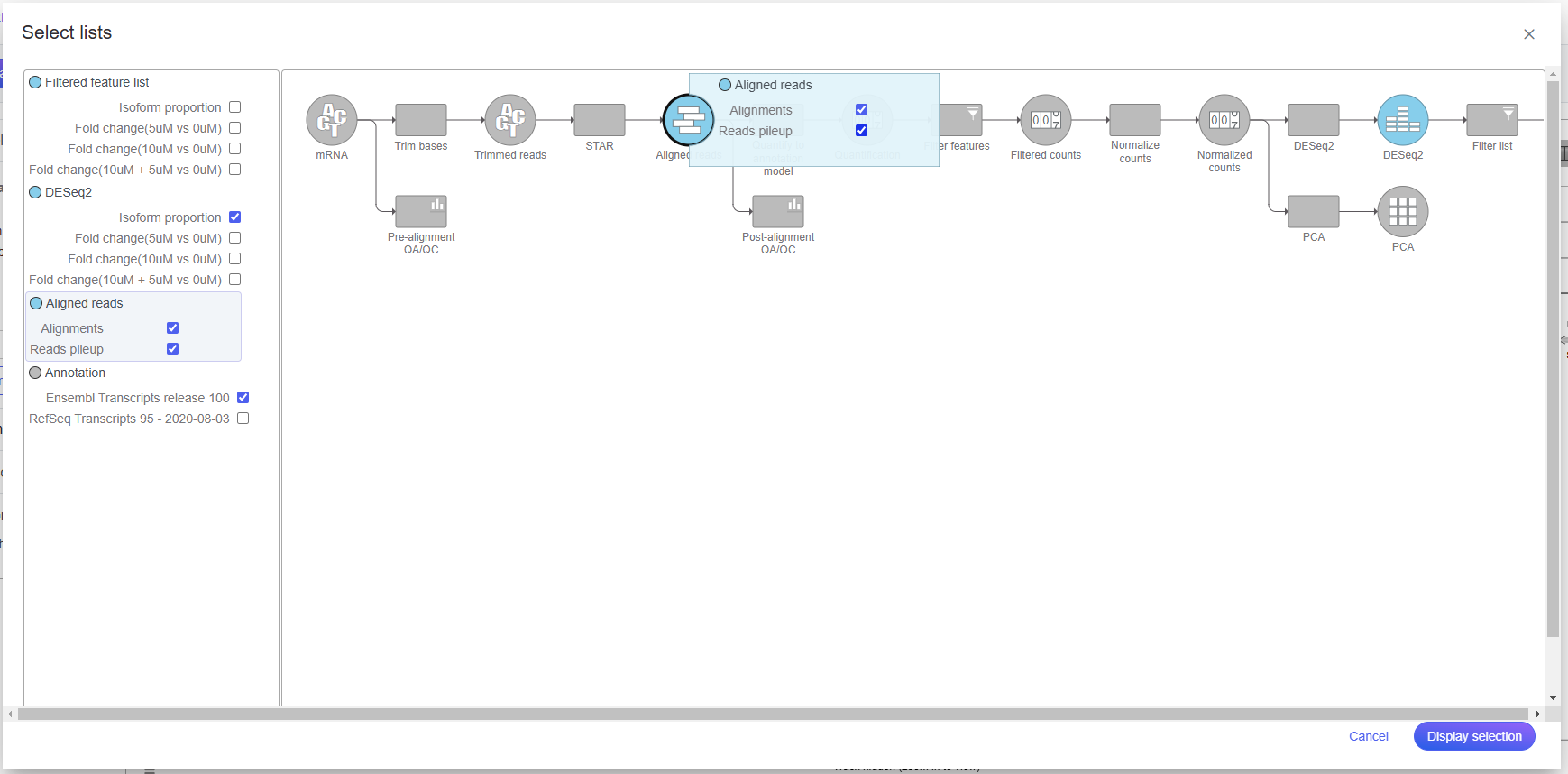
A pop-up dialog showing the pipeline allows us to choose which data to display as tracks in Chromosome view (Figure 3).

<figure><img src="https://1384254481-files.gitbook.io/~/files/v0/b/gitbook-x-prod.appspot.com/o/spaces%2FJVEESmJAPppJ3ijFq5aR%2Fuploads%2Fgit-blob-4d3cdc1e50e27f15ed817187b20efc561cda13a9%2Fselect%20tracks.png?alt=media" alt=""><figcaption><p><em>Figure 3. Choosing tracks to display in Chromosome view</em></p></figcaption></figure>

* Click **Reads pileup** under Aligned reads on the left-hand side of the dialog
* Click **Display selection** to make the change

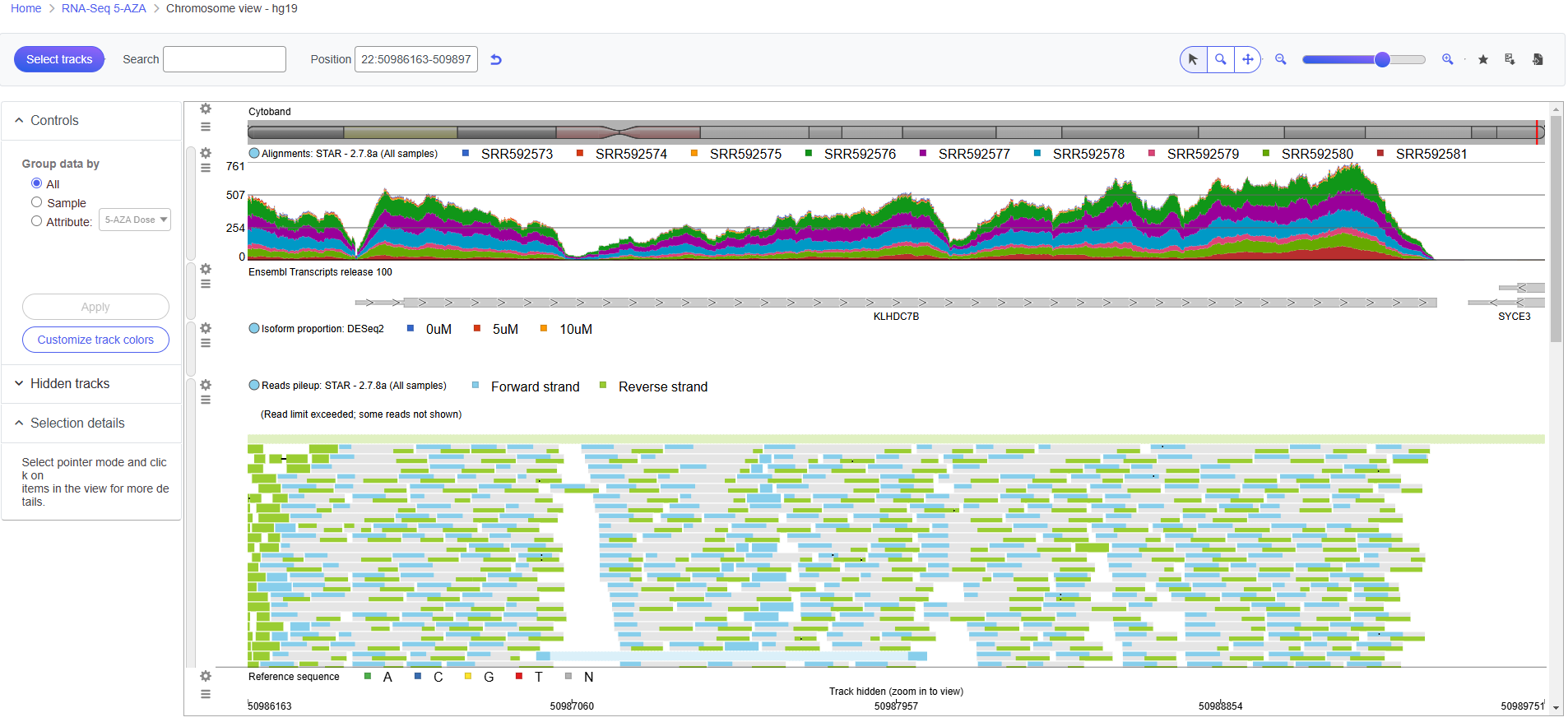
The reads pileup track is now included (Figure 4).

<figure><img src="https://1384254481-files.gitbook.io/~/files/v0/b/gitbook-x-prod.appspot.com/o/spaces%2FJVEESmJAPppJ3ijFq5aR%2Fuploads%2Fgit-blob-191ff84d09eeb899443125c254d66388133db86a%2Fadded%20reads%20pileup%20track.png?alt=media" alt=""><figcaption><p><em>Figure 4. The reads pileup track shows every read in its aligned position on the reference genome</em></p></figcaption></figure>

To learn more about Chromosome view, please consult the [Chromosome View](https://help.connected.illumina.com/partek/partek-flow/user-manual/visualizations/chromosome-view) user guide.

## Additional Assistance

If you need additional assistance, please visit [our support page](http://www.partek.com/support) to submit a help ticket or find phone numbers for regional support.